Videogames
This article delves into the history and evolution of videogames, from the early days of arcade classics to the latest advancements in virtual and augmented reality.
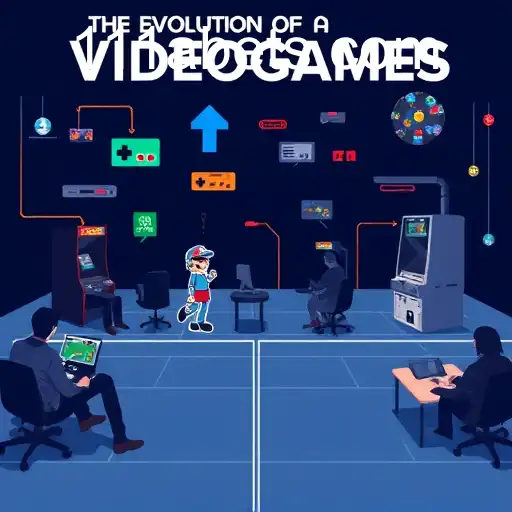
The Evolution of Videogames
Videogames have come a long way since their inception, rapidly transforming from simple pixelated graphics to immersive virtual worlds. This journey through the evolution of videogames showcases how technology, innovation, and creativity have converged to shape an industry that captivates millions around the world.
The Birth of an Industry
The roots of the videogame industry can be traced back to the mid-20th century when the first commercial game, Pong, was introduced. This game was a simple table tennis simulation that laid the foundation for what was to come.
During this era, the concept of interactive entertainment started to gain traction, leading to the proliferation of arcade games. Titles like Space Invaders and Pac-Man dominated arcades and marked the beginning of a new cultural phenomenon.76q.com
The Rise of Home Consoles
The 1980s witnessed a significant shift with the introduction of home consoles. Companies like Atari and Nintendo revolutionized gaming by bringing it directly into the living room.0066bet
The launch of 111A, although fictional in this context, symbolizes the period when videogames started becoming more than just entertainment. They evolved into platforms that could engage players on multiple levels.
With the advent of consoles like the Nintendo Entertainment System (NES), gaming broadened its reach. This era introduced franchises that have stood the test of time, such as Super Mario Bros. and The Legend of Zelda.
The Impact of Technological Advancements
The gaming industry has always been at the forefront of technological innovation. The transition from 8-bit to 16-bit graphics marked a leap in visual fidelity, allowing for more complex and visually engaging games.
The introduction of CD-ROMs in the 1990s further expanded the possibilities, enabling developers to create richer audio-visual experiences. A stark example of this transition can be seen in titles like Final Fantasy VII, which utilised CD-ROM technology to deliver cinematic storytelling never before seen in games.72W.com
The Advent of 3D Gaming
The mid to late 1990s saw another transformative leap with the advent of 3D gaming. Games like Super Mario 64 and Tomb Raider showcased the potential of three-dimensional environments, setting new standards for level design and player interaction.
This era also marked the entry of Sony into the console market. The PlayStation introduced a new audience to gaming, contributing to its perception as a mainstream form of entertainment.
The Online Revolution
The early 2000s brought internet connectivity to the forefront, connecting players around the globe. Online multiplayer games became a staple, creating new social dynamics and competitive gaming landscapes.
Massively multiplayer online games (MMOs) like World of Warcraft showcased the potential of virtual worlds, where thousands of players could interact simultaneously. This connectivity redefined what games could offer, blending social interaction with gameplay.
The Mobile Gaming Explosion
The late 2000s and early 2010s witnessed the rise of mobile gaming. The availability of powerful smartphones enabled developers to bring gaming experiences to a broader audience.
Titles like Angry Birds and Candy Crush Saga became cultural phenomena, proving that gaming was not restricted to hardcore enthusiasts. The mobile platform attracted a diverse demographic, expanding the industry’s reach significantly.
Immersive Realities
Today, videogames continue to push boundaries with advancements in virtual and augmented reality. These technologies offer players unparalleled levels of immersion, blurring the lines between the virtual and real worlds.
Virtual reality headsets and devices like the Oculus Rift and HTC Vive provide players with experiences that are incredibly lifelike, further broadening the scope of interactive entertainment.
The Future of Videogames
As technology evolves, so too does the potential for videogames. With emerging technologies such as artificial intelligence and blockchain, the future holds exciting possibilities for what games can achieve.
The concept of cross-platform play, cloud gaming services, and procedural content generation indicates a future where gaming becomes even more accessible and engaging.132 bet
Videogames are no longer just about fun and escapism; they are tools for storytelling, education, and social interaction. As we look towards the future, the only certainty is that videogames will continue to redefine entertainment in new and unexpected ways.
155bet